Signed in as:
filler@godaddy.com

Choosing the right fishing rig can make the difference between a quiet session and one you’ll remember. In Australian waters — where conditions, species, and fishing styles vary wildly — there’s no such thing as a one-size-fits-all setup.
This guide breaks down the most effective fishing rigs used by real Aussie fishos, from simple beach setups to heavy offshore gear. Whether you’re chasing whiting in the surf, snapper off the rocks, mulloway in the gutters, or sharks from the sand, the right rig gives you a serious advantage before the bait even hits the water.
Everything here is based on practical, real-world use — not theory. These are the rig styles that consistently produce fish across beaches, reefs, and offshore grounds around Australia.
If you're unsure which rig suits your target species, try our Rig Finder.
Every rig style in this guide is based on real fishing conditions across Australian beaches, reefs, and offshore waters.
Most fishos overthink rigs — but the right choice usually comes down to a few simple factors. The key is matching your rig to the fish, the environment, and how you’re fishing, not just copying what someone else is using.
Here are the main things that actually matter.
Different fish feed differently, and your rig should reflect that.
Bottom feeders like whiting and bream respond well to lighter paternoster-style rigs that present bait naturally just off the sand. Predators like snapper and mulloway need stronger leaders and larger hooks to handle bigger baits and harder runs. Step into shark or heavy reef territory, and the rig needs to handle abrasion, structure, and serious pressure.
Start with the species first — everything else flows from there.
The same bait can behave very differently depending on the environment.
Beach fishing often rewards streamlined rigs that cast well and resist tangling in surf. Estuary rigs are usually lighter and more finesse-based. Offshore and reef fishing demands stronger leaders and stiffer droppers to handle depth, current, and structure.
A good rule: the rougher the terrain, the tougher your rig needs to be.
Some rigs are built to fly. Others are built to fish.
Long cast pulley rigs are designed for distance and clean bait deployment — ideal when fish are holding beyond the breakers. Simpler paternoster rigs may not cast as far, but they present bait naturally and are incredibly reliable in close.
You don’t always need more distance — just the right presentation for where fish are feeding.
Hook choice changes how a rig fishes more than most people realise.
Circle hooks are popular because they tend to hook fish cleanly in the corner of the mouth, especially on larger species. Beak or J-style hooks can suit certain bait styles or active fishing techniques. Sliding snells and twin-hook setups are useful when fishing larger baits like squid or whole fish.
The goal isn’t “best hook” — it’s the best hook for the job.
Heavier isn’t always better.
While stepping up leader strength can help around reef or toothy fish, going too heavy can reduce bait movement and bites in calmer conditions. Lighter rigs often outperform heavy setups when chasing smaller species or fishing clean sand.
The sweet spot is using enough strength to land the fish without overbuilding the rig.
There are hundreds of rig variations out there, but only a handful consistently perform across Australian conditions.
Double paternoster rigs remain a favourite because they present bait naturally and are easy to fish across gutters and calm surf.
Proven Example:
Whiting Double Paternoster Rig
Twin-hook rigs with adjustable spacing handle larger baits and multiple environments, making them ideal for snapper and mulloway.
Proven Example:
Snapper & Mulloway Twin Hook Rig
Pulley rigs streamline your bait during the cast and deploy cleanly on splashdown, improving both range and presentation.
Proven Example:
Long Cast Beach Pulley Rig
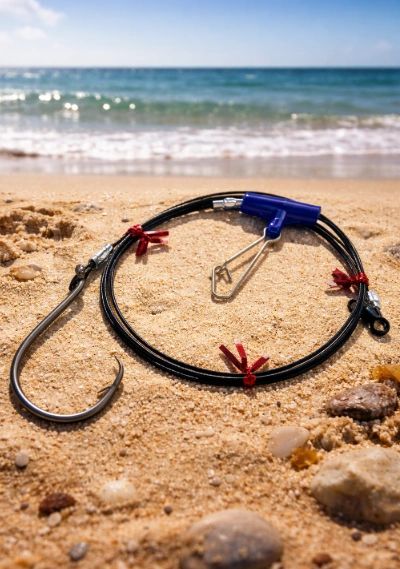
Heavy coated wire rigs are essential when targeting large sharks or toothy predators in demanding conditions.
Proven Example:
650lb Coated Wire Shark Rig
Twisted paternoster rigs are trusted offshore because they resist tangles and hold up around reef structure.
Proven Example:
Offshore Reef Twisted Paternoster
Mass-produced rigs often work fine in calm conditions, but Australian fishing regularly involves heavy surf, reef abrasion, and powerful fish.
Hand-tied rigs are usually built with real-world use in mind — stronger connections, better spacing, and components chosen for durability rather than shelf appeal.
That’s why many experienced fishos move toward hand-tied rigs over time. Not because they look better, but because they hold up better in real conditions.
That said, time on the water still matters most. Good presentation will always beat expensive gear used poorly.
Using the same rig everywhere is one of the biggest mistakes. Different environments demand different strengths and layouts.
Going too heavy or too light can also hurt results. Overbuilt rigs reduce bites, while underbuilt rigs fail around structure.
Another common issue is ignoring local conditions. Not all rigs are designed for harsh Australian environments, and that becomes obvious in rough surf or reef terrain.
Simple, well-designed rigs usually outperform flashy or overly complex setups.
If you're building a dependable rig kit, a few proven styles cover most situations:
These rig styles have stood the test of time because they consistently work in Australian waters.
Choosing the right fishing rig doesn’t need to be complicated — but it does make a real difference.
Matching your rig to the species, conditions, and terrain will consistently improve results.
The rigs covered here are proven across Australian fishing environments, from calm estuaries through to heavy surf and offshore reefs.
You can explore our step-by-step rig setup guides here.
If you prefer using proven, ready-to-fish setups, you can browse our hand-tied rigs in our online shop.
Copyright © 2026 Wiggle ya Worm - Quality Hand Tied Fishing Rigs - All Rights Reserved.